
Course Surface
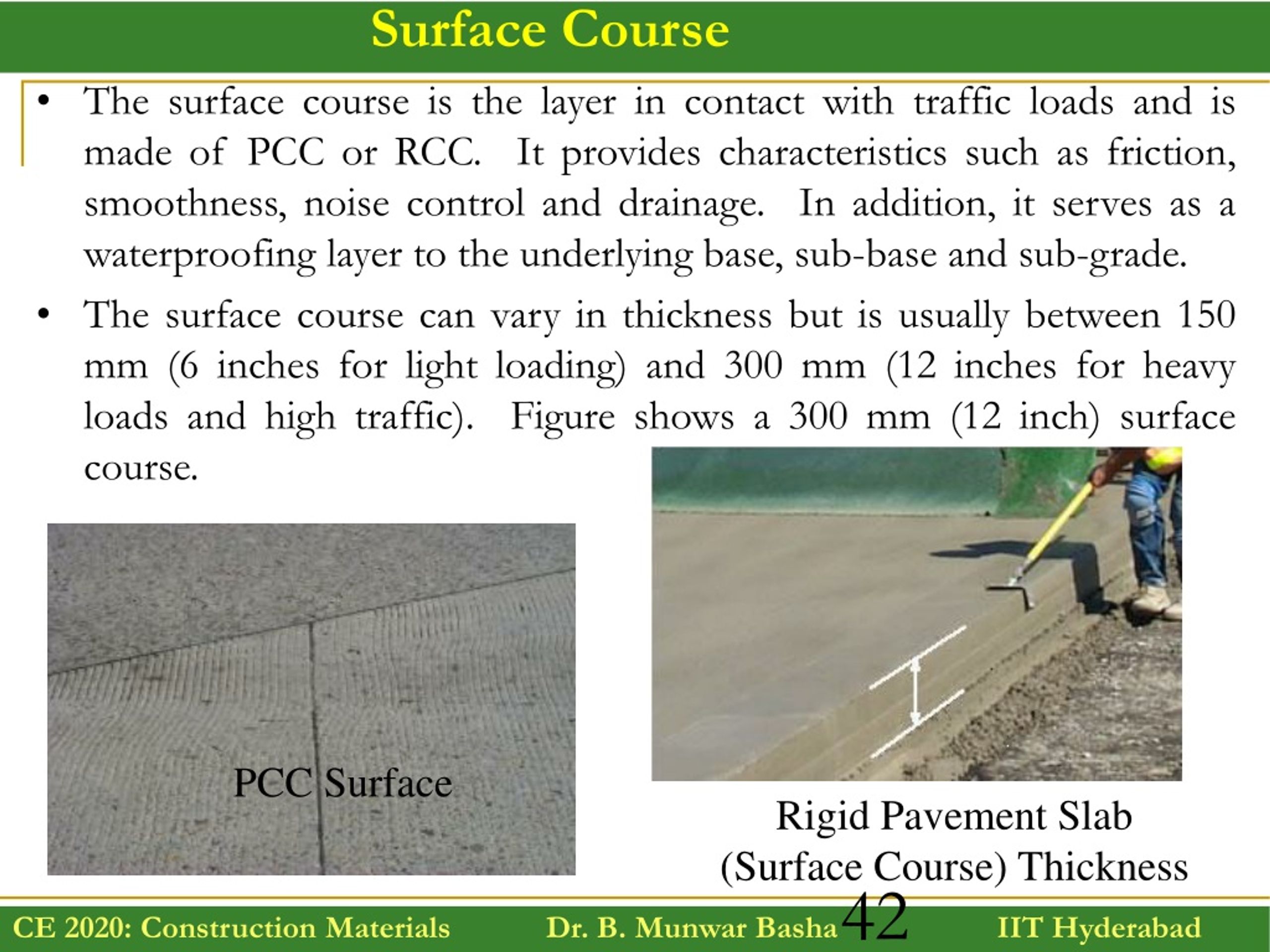
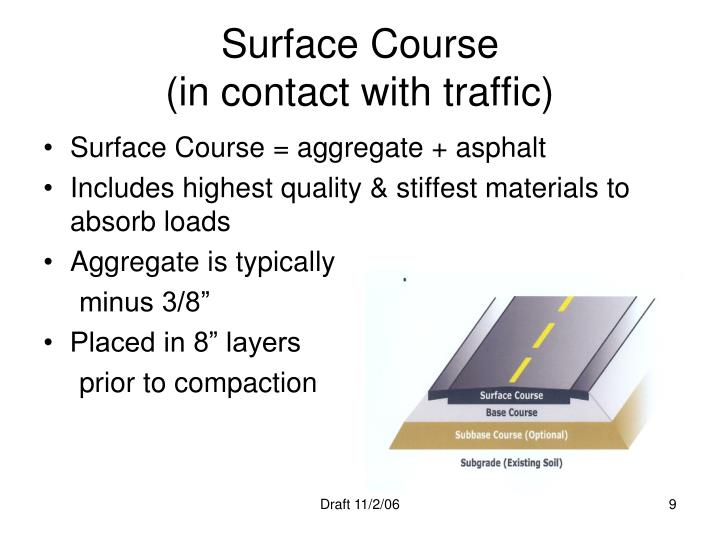
Course Surface - Acts as the foundational layer, providing uniform. The top layer exposed to traffic, designed for durability, skid resistance, and water percolation minimization. Each layer plays a critical role in. Asphalt surface course refers to an aggregate, sand, and asphalt cement mixture used as the final surface course placed in a lift (often above the intermediate asphalt pavement course), in. In summary, the binder course asphalt acts as a foundation layer, providing strength and stability to the road, while the topcoat of asphalt serves as the final wearing surface, offering a smooth. Road pavement consists of four primary layers: It is the part of a road that endures direct contact with traffic. Surface course (top layer) the surface course is the uppermost layer of asphalt, specifically designed to withstand all the wear and tear from traffic and weather. At byrne & jones sports construction, we specialize in designing, constructing, and resurfacing athletic running tracks for schools, universities, and athletic facilities. A pavement structure consisting of hma surface course overlaying a portland cement concrete (pcc) or roller compacted concrete (rcc) slab of relatively high bending resistance which. All these components belong to a typical flexible pavement, whereas rigid pavement usually. It is the part of a road that endures direct contact with traffic. The surface course is the very last layer of road construction (prior to markings). Road pavement consists of four primary layers: It provides characteristics such as friction (see figure 3), smoothness, noise control and drainage. Each layer plays a critical role in. Surface course or wearing course. The surface course is the layer in contact with traffic loads and is made of pcc. The top layer exposed to traffic, designed for durability, skid resistance, and water percolation minimization. Asphalt surface course refers to an aggregate, sand, and asphalt cement mixture used as the final surface course placed in a lift (often above the intermediate asphalt pavement course), in. Asphalt surface course refers to an aggregate, sand, and asphalt cement mixture used as the final surface course placed in a lift (often above the intermediate asphalt pavement course), in. The wearing course, also known as a friction course or surface course, is the upper layer in roadway, airfield, and dockyard construction. At byrne & jones sports construction, we specialize. Surface course or wearing course. The unit price shall include all equipment, materials and labor required to furnish, weigh and place the surface course. Each layer plays a critical role in. The top layer exposed to traffic, designed for durability, skid resistance, and water percolation minimization. Surface course (top layer) the surface course is the uppermost layer of asphalt, specifically. Each layer plays a critical role in. Asphalt surface course refers to an aggregate, sand, and asphalt cement mixture used as the final surface course placed in a lift (often above the intermediate asphalt pavement course), in. The wearing course, also known as a friction course or surface course, is the upper layer in roadway, airfield, and dockyard construction. All. Occasionally, you will encounter materials, such. It provides characteristics such as friction (see figure 3), smoothness, noise control and drainage. Surface course or wearing course. The unit price shall include all equipment, materials and labor required to furnish, weigh and place the surface course. The surface course is the very last layer of road construction (prior to markings). Each layer plays a critical role in. Aggregate surface course, type b. Road pavement consists of four primary layers: It provides characteristics such as friction (see figure 3), smoothness, noise control and drainage. Surface course or wearing course. Acts as the foundational layer, providing uniform. A pavement structure consisting of hma surface course overlaying a portland cement concrete (pcc) or roller compacted concrete (rcc) slab of relatively high bending resistance which. Aggregate surface course, type b. Following are the different components of road structure: The surface course is the very last layer of road construction (prior to markings). A pavement structure consisting of hma surface course overlaying a portland cement concrete (pcc) or roller compacted concrete (rcc) slab of relatively high bending resistance which. Surface course (top layer) the surface course is the uppermost layer of asphalt, specifically designed to withstand all the wear and tear from traffic and weather. The top layer exposed to traffic, designed for. The top layer exposed to traffic, designed for durability, skid resistance, and water percolation minimization. The surface course is the very last layer of road construction (prior to markings). In summary, the binder course asphalt acts as a foundation layer, providing strength and stability to the road, while the topcoat of asphalt serves as the final wearing surface, offering a. A pavement structure consisting of hma surface course overlaying a portland cement concrete (pcc) or roller compacted concrete (rcc) slab of relatively high bending resistance which. In summary, the binder course asphalt acts as a foundation layer, providing strength and stability to the road, while the topcoat of asphalt serves as the final wearing surface, offering a smooth. All these. At byrne & jones sports construction, we specialize in designing, constructing, and resurfacing athletic running tracks for schools, universities, and athletic facilities. The wearing course, also known as a friction course or surface course, is the upper layer in roadway, airfield, and dockyard construction. Surface course (top layer) the surface course is the uppermost layer of asphalt, specifically designed to. Road pavement consists of four primary layers: In summary, the binder course asphalt acts as a foundation layer, providing strength and stability to the road, while the topcoat of asphalt serves as the final wearing surface, offering a smooth. The term 'surface course' is sometimes used. Surface course or wearing course. It is the part of a road that endures direct contact with traffic. The surface course is the layer in contact with traffic loads and is made of pcc. Each layer plays a critical role in. All these components belong to a typical flexible pavement, whereas rigid pavement usually. Occasionally, you will encounter materials, such. The unit price shall include all equipment, materials and labor required to furnish, weigh and place the surface course. Surface course (top layer) the surface course is the uppermost layer of asphalt, specifically designed to withstand all the wear and tear from traffic and weather. At byrne & jones sports construction, we specialize in designing, constructing, and resurfacing athletic running tracks for schools, universities, and athletic facilities. Following are the different components of road structure: The surface course is the very last layer of road construction (prior to markings). The wearing course, also known as a friction course or surface course, is the upper layer in roadway, airfield, and dockyard construction. The top layer exposed to traffic, designed for durability, skid resistance, and water percolation minimization.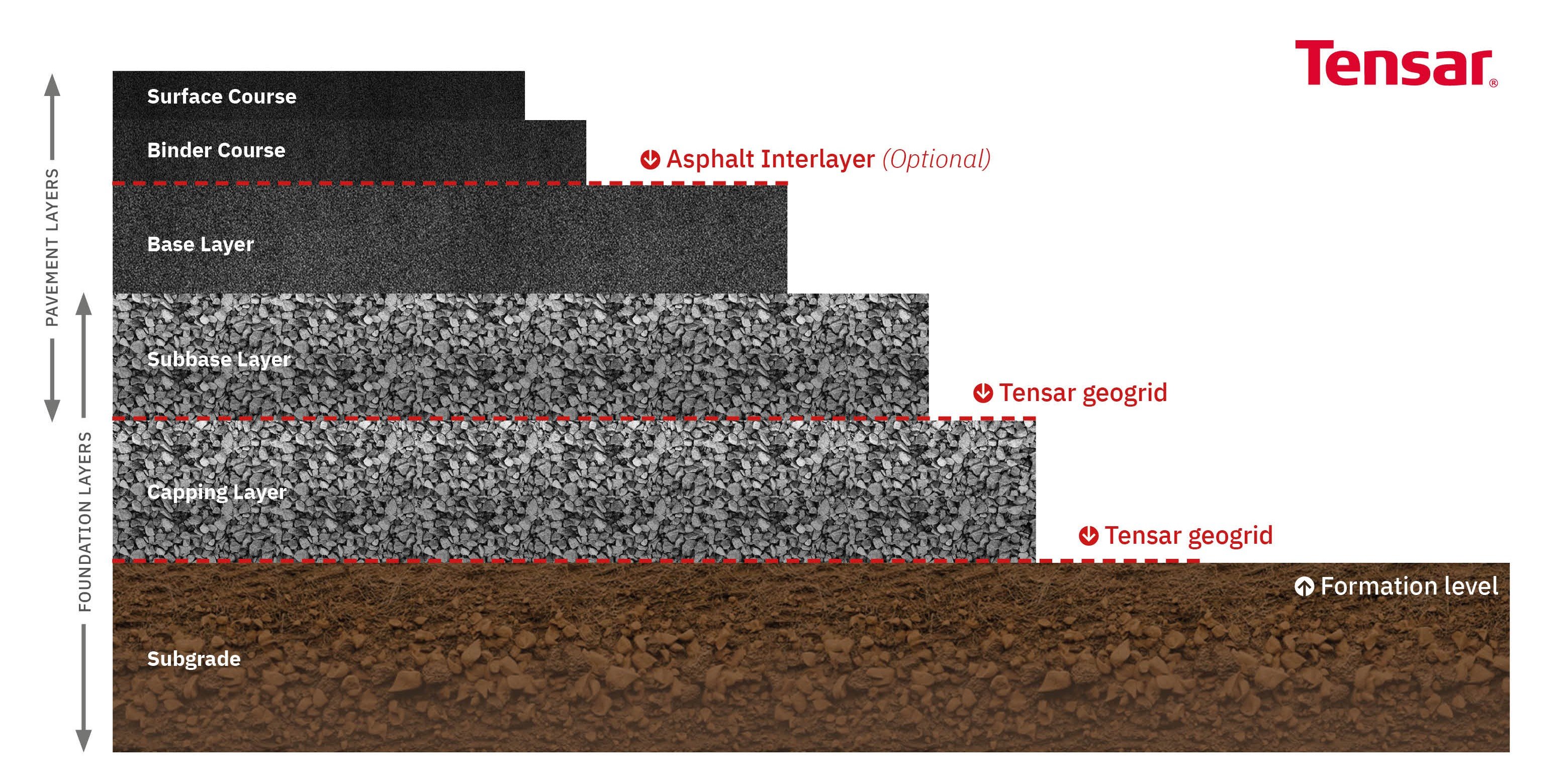
What are the functions of layers in a flexible pavement?
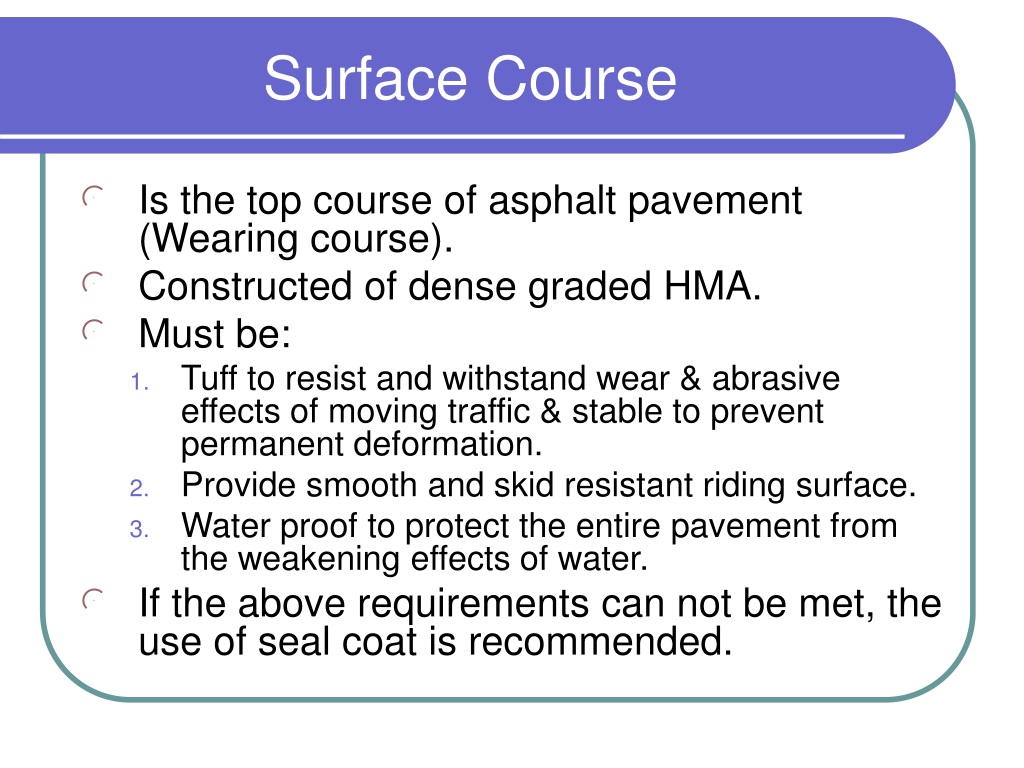
PPT Flexible Pavement Design PowerPoint Presentation, free download
Coarse surface aggregate reduces sediment compared to roads built on

Anatomy of Asphalt Pavement Eagle Rock
..jpg)
Introduction to Pavement Design ppt download
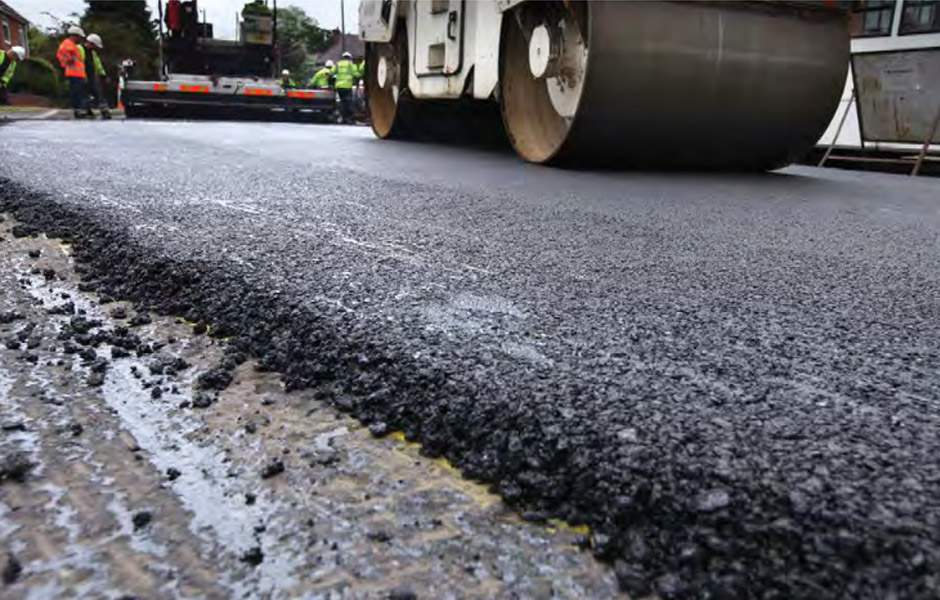
Limestone Surface Course Newlay Asphalt

Asphalt Wearing Course Road Black Top Two Lane Blacktop Asphalt
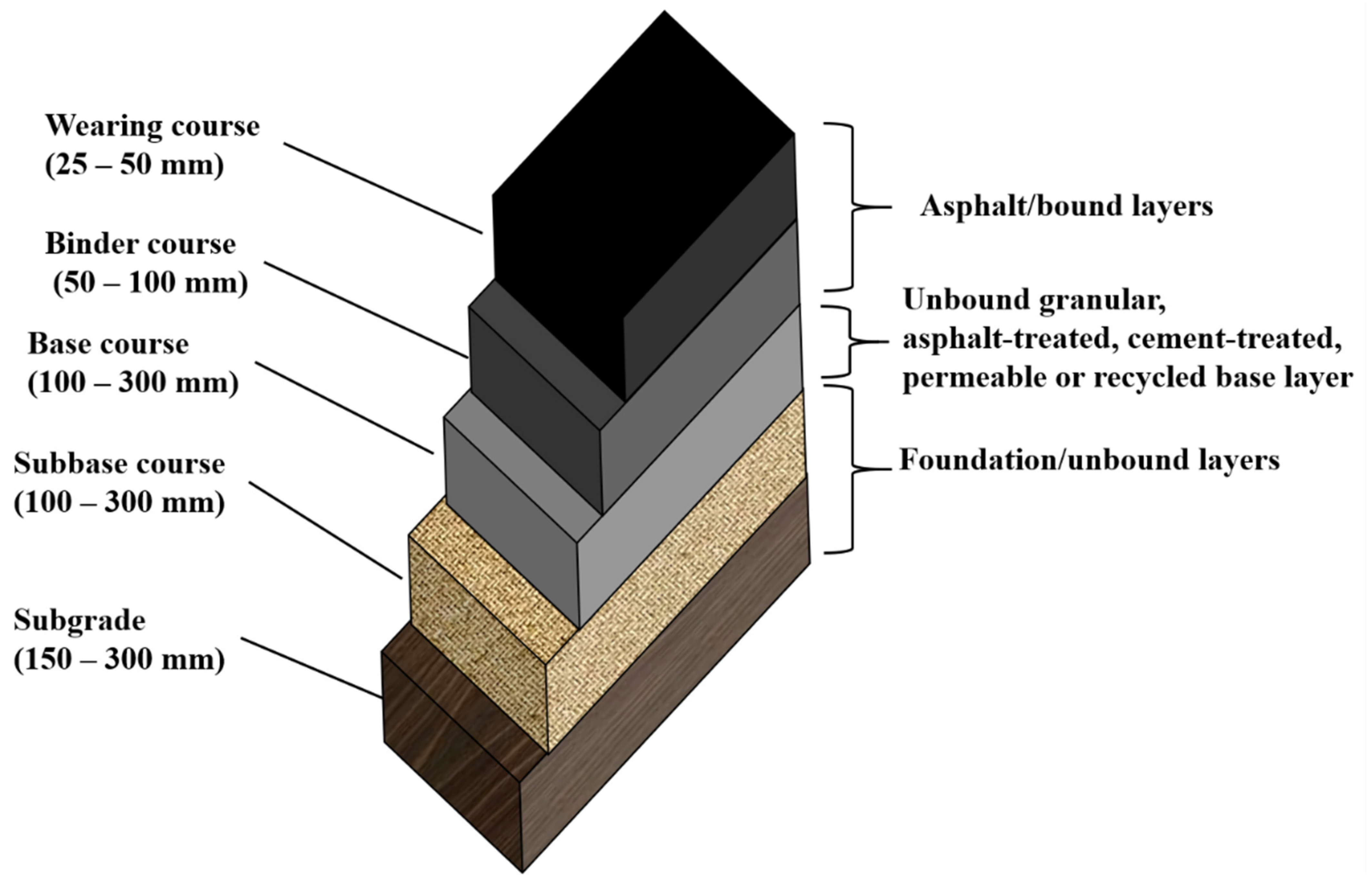
Application of RAP in Asphalt Concrete Pavements Encyclopedia MDPI
PPT Pavement Types PowerPoint Presentation, free download ID333287
PPT PAVEMENT DESIGN for DUMMIES PowerPoint Presentation ID280221
It Provides Characteristics Such As Friction (See Figure 3), Smoothness, Noise Control And Drainage.
A Pavement Structure Consisting Of Hma Surface Course Overlaying A Portland Cement Concrete (Pcc) Or Roller Compacted Concrete (Rcc) Slab Of Relatively High Bending Resistance Which.
Aggregate Surface Course, Type B.
Acts As The Foundational Layer, Providing Uniform.
Related Post: