Course Objectives
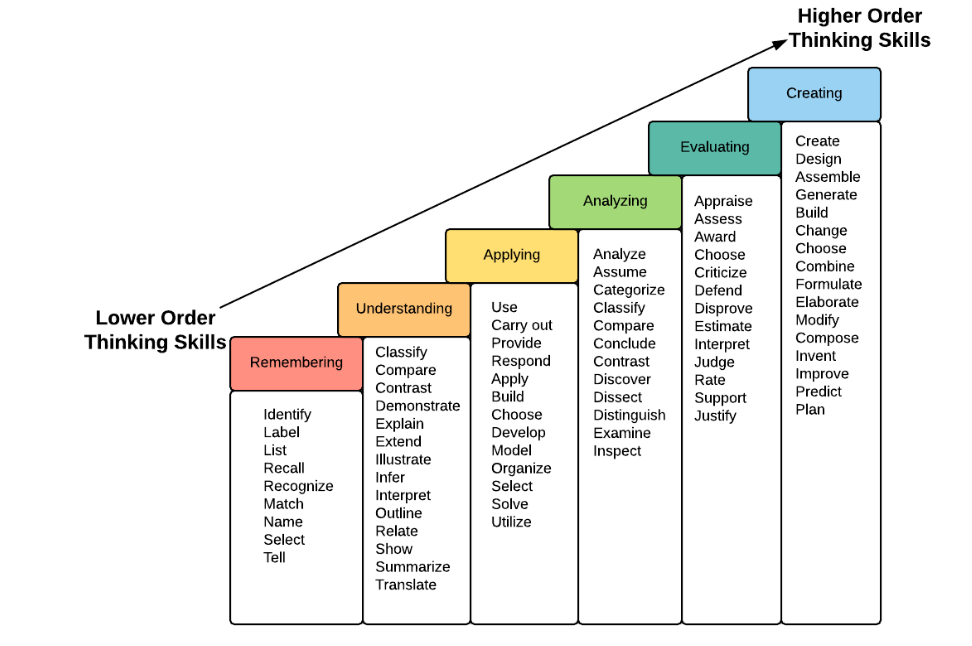
Course Objectives - See examples, tips, and resources for. Find examples, tips, and a formula for writing objectives from the learner's perspective. I'll describe how creating detailed course objectives, and communicating them clearly to your students, can help the instructor, enhance student learning, and aid in the. Bloom’s taxonomy is a hierarchical model used for classifying learning objectives by levels of complexity and specificity. Cognitive, affective, and psychomotor objectives. Objectives define what the students should learn, guiding the selection of teaching. In contrast, course outcomes define the. Bloom’s taxonomy was created to outline and clarify how learners. Learn the difference between course objectives and outcomes, and how they guide the teaching and learning process. Course objectives articulate the intentions of the educator—they outline what the instructor aims to achieve through a specific course. Objectives define what the students should learn, guiding the selection of teaching. Learn the difference between course objectives and outcomes, and how they guide the teaching and learning process. Be sure to differentiate between subordinate. See examples of course objectives and outcomes for data. Learn how to write clear and specific course objectives that can be assessed and aligned with bloom's taxonomy. The relationship between measurable course objectives and aligned outcomes is cyclical and dynamic. Bloom’s taxonomy is a hierarchical model used for classifying learning objectives by levels of complexity and specificity. Bloom’s taxonomy was created to outline and clarify how learners. Bloom’s taxonomy was created to outline and clarify how learners. Cognitive, affective, and psychomotor objectives. What must students be able to do before accomplishing the course objectives? Bloom’s taxonomy is a hierarchical model used for classifying learning objectives by levels of complexity and specificity. Course objectives can be categorized into three primary types: Be sure to differentiate between subordinate. I'll describe how creating detailed course objectives, and communicating them clearly to your students, can help. Cognitive, affective, and psychomotor objectives. Course objectives can be categorized into three primary types: Learn the difference between course objectives and outcomes, and how they guide the teaching and learning process. Each type focuses on different aspects of learning, allowing. I'll describe how creating detailed course objectives, and communicating them clearly to your students, can help the instructor, enhance student. In contrast, course outcomes define the. See examples, tips, and resources for. Course objectives can be categorized into three primary types: Each type focuses on different aspects of learning, allowing. Learn the difference between course objectives and student learning outcomes, and how they relate to assessment and program design. Bloom’s taxonomy is a hierarchical model used for classifying learning objectives by levels of complexity and specificity. Find examples, tips, and a formula for writing objectives from the learner's perspective. See examples, tips, and resources for. Cognitive, affective, and psychomotor objectives. See examples of course objectives and outcomes for data. Learn how to write clear and specific course objectives that can be assessed and aligned with bloom's taxonomy. Learning objectives define the course purpose and are essential for developing relevant instructional materials, activities, and assessments to support and align with course outcomes. Bloom’s taxonomy was created to outline and clarify how learners. Course objectives articulate the intentions of the educator—they. Learn the difference between course objectives and student learning outcomes, and how they relate to assessment and program design. Cognitive, affective, and psychomotor objectives. Bloom’s taxonomy was created to outline and clarify how learners. Course objectives can be categorized into three primary types: Learn how to write course level objectives (clos) and student learning outcomes (slos) that align with your. What must students be able to do before accomplishing the course objectives? See examples of course objectives and outcomes for data. The relationship between measurable course objectives and aligned outcomes is cyclical and dynamic. Objectives define what the students should learn, guiding the selection of teaching. Cognitive, affective, and psychomotor objectives. See examples of course objectives and outcomes for data. Course objectives are specific statements of what. Be sure to differentiate between subordinate. Course objectives articulate the intentions of the educator—they outline what the instructor aims to achieve through a specific course. I'll describe how creating detailed course objectives, and communicating them clearly to your students, can help the instructor, enhance. The relationship between measurable course objectives and aligned outcomes is cyclical and dynamic. Each type focuses on different aspects of learning, allowing. Find examples, tips, and a formula for writing objectives from the learner's perspective. Learn how to write clear and specific course objectives that can be assessed and aligned with bloom's taxonomy. What must students be able to do. Course objectives articulate the intentions of the educator—they outline what the instructor aims to achieve through a specific course. Bloom’s taxonomy was created to outline and clarify how learners. Bloom’s taxonomy was created to outline and clarify how learners. Find examples, tips, and a formula for writing objectives from the learner's perspective. Course objectives can be categorized into three primary. Course objectives articulate the intentions of the educator—they outline what the instructor aims to achieve through a specific course. See examples of course objectives and outcomes for data. Course objectives can be categorized into three primary types: Bloom’s taxonomy was created to outline and clarify how learners. Learn how to write clear and specific course objectives that can be assessed and aligned with bloom's taxonomy. Find examples, tips, and a formula for writing objectives from the learner's perspective. In contrast, course outcomes define the. The relationship between measurable course objectives and aligned outcomes is cyclical and dynamic. Each type focuses on different aspects of learning, allowing. See examples, tips, and resources for. Bloom’s taxonomy is a hierarchical model used for classifying learning objectives by levels of complexity and specificity. What must students be able to do before accomplishing the course objectives? Bloom’s taxonomy is a hierarchical model used for classifying learning objectives by levels of complexity and specificity. Learning objectives define the course purpose and are essential for developing relevant instructional materials, activities, and assessments to support and align with course outcomes. Cognitive, affective, and psychomotor objectives. Objectives define what the students should learn, guiding the selection of teaching.
Learning Newman College, Thodupuzha
Writing Measurable Course Objectives The Center for Teaching and
Objectives Images

How To Write Training Objectives For eLearning Effectively
10 Course Objectives Examples EdApp The Mobile LMS
How to write effective Learning Objectives
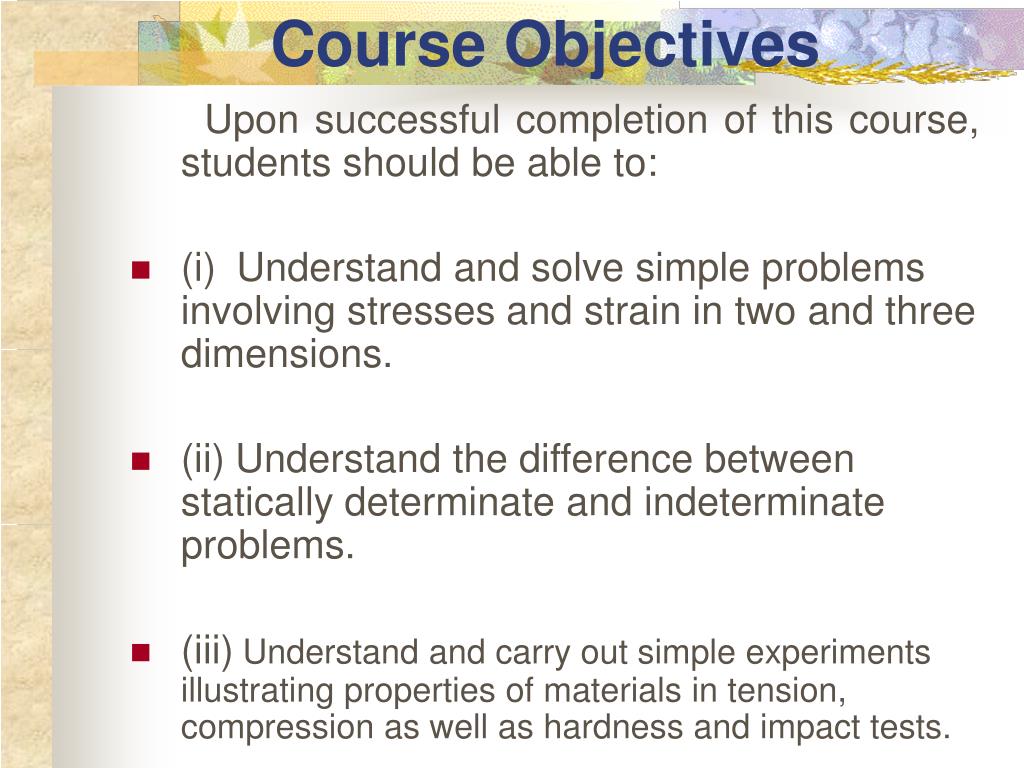
PPT ME16A INTRODUCTION TO STRENGTH OF MATERIALS PowerPoint
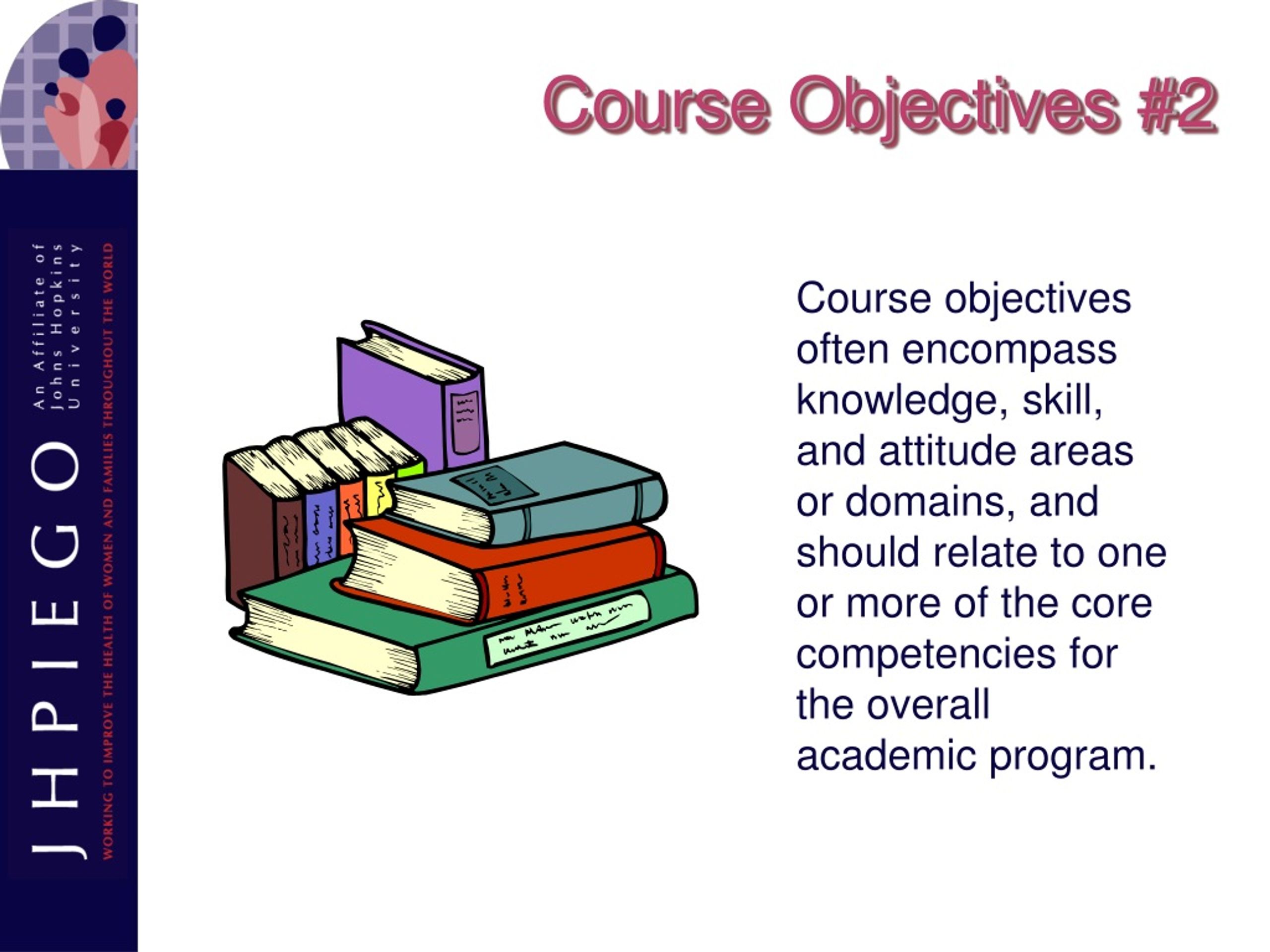
PPT Develop Objectives for Learning PowerPoint Presentation, free
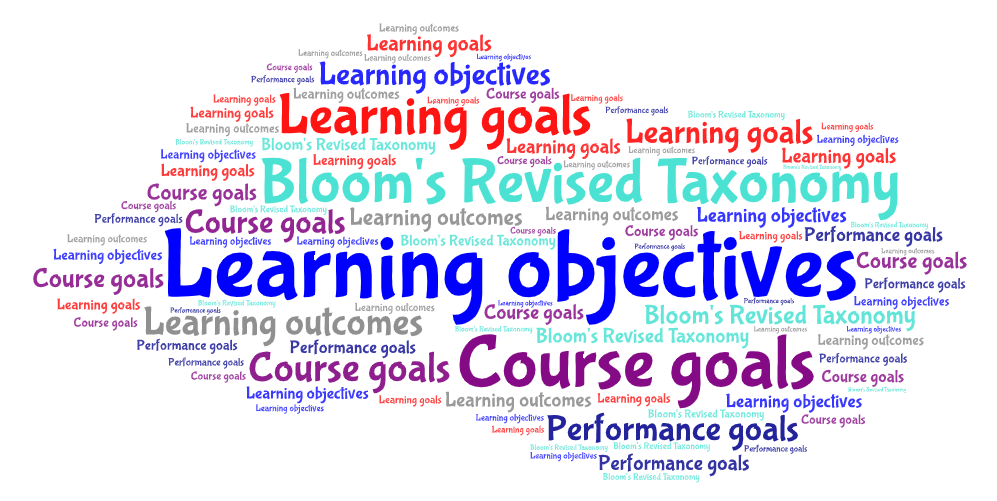
Objectives Images
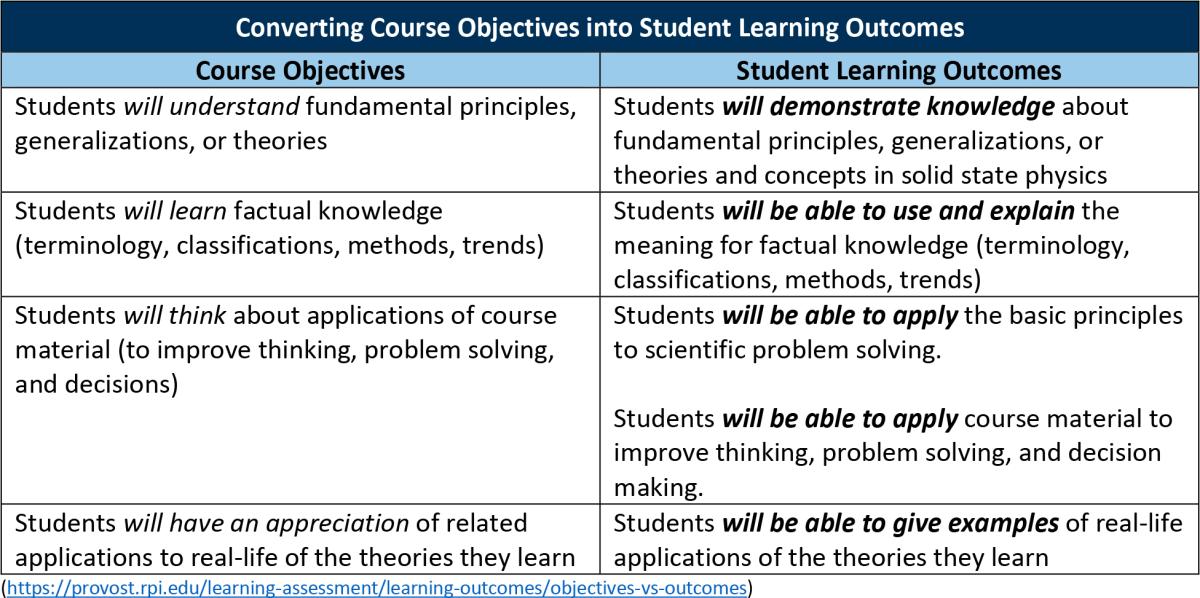
Student Learning The University of New Orleans
Learn The Difference Between Course Objectives And Outcomes, And How They Guide The Teaching And Learning Process.
Bloom’s Taxonomy Was Created To Outline And Clarify How Learners.
Be Sure To Differentiate Between Subordinate.
Course Objectives Are Specific Statements Of What.
Related Post: